
The biochemistry of emotions: neurotransmission.
Physiology
The PSiO technology has multiple positive effects on : immunity, brain activity, nervous balance, neural communication and pineal gland.
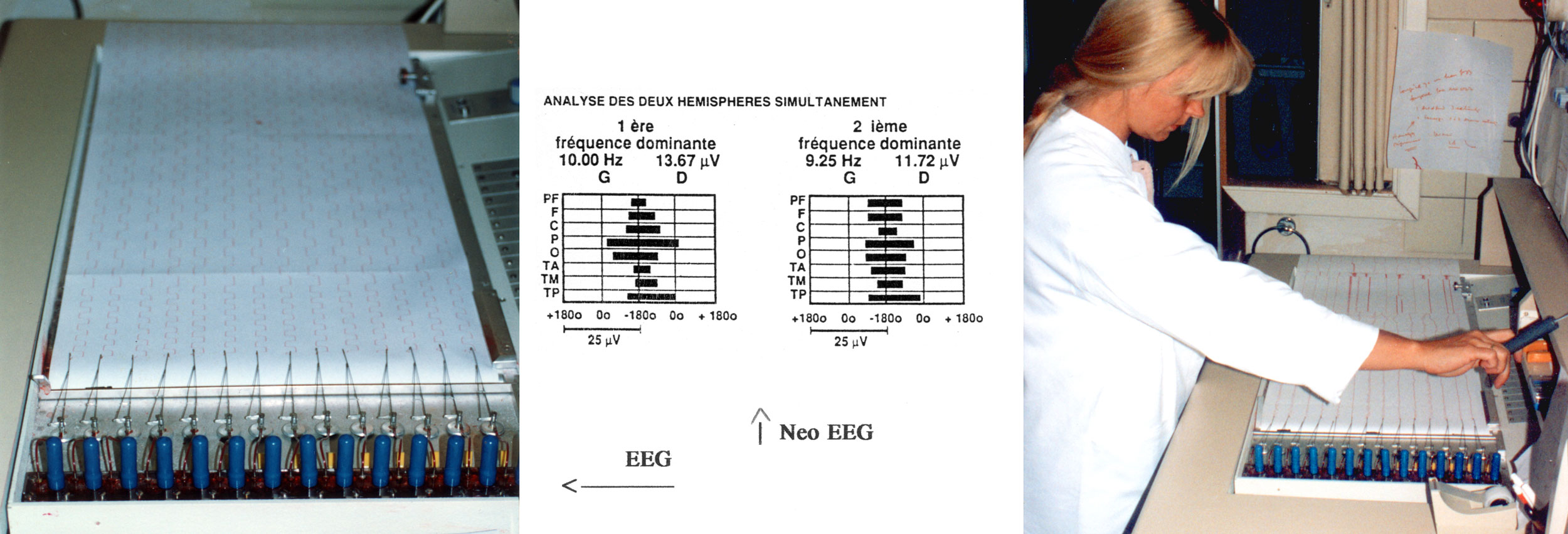
NEO EEG

NEO-EEG allowed for the first time an EEG monopolar detection, i.e. the recording of the activity present under each electrode, thereby providing a perfect representation of the brain cerebral activity.
NEO-EGG technique also allows to detect the dominant frequencies of the EGG tracings, and for each of these, to determine their frequency within a quarter of a second, their amplitude within a hundredth of a microvolt, their phase, their spectrum and any possible asymmetry between the cerebral hemispheres both in frequency and in amplitude.
Research carried out by S. Dumonceau showed that irrespective of the stimulation frequencies, brain waves stabilize between 5 and 7 hertz ( thêta). This evidences a general effect of « letting go » as well as the absence of any frequency acquisition at brain level.
Pineal glands
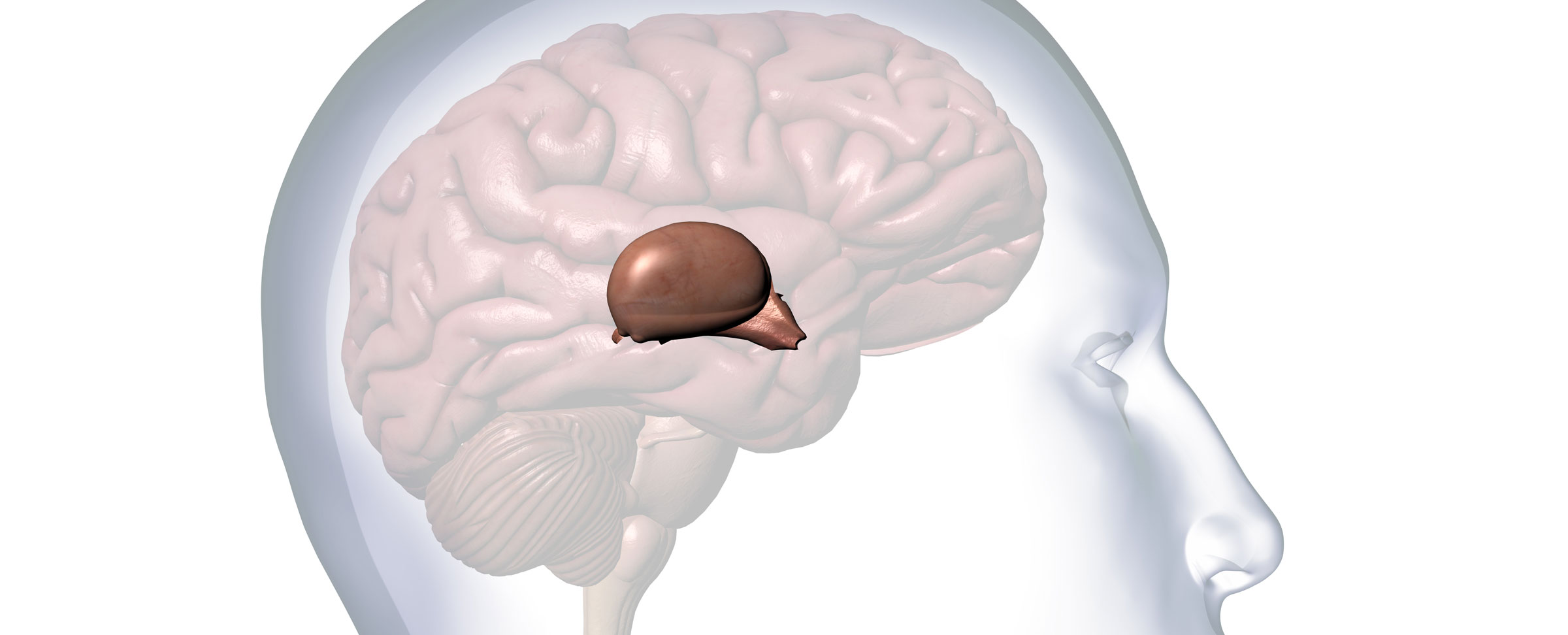
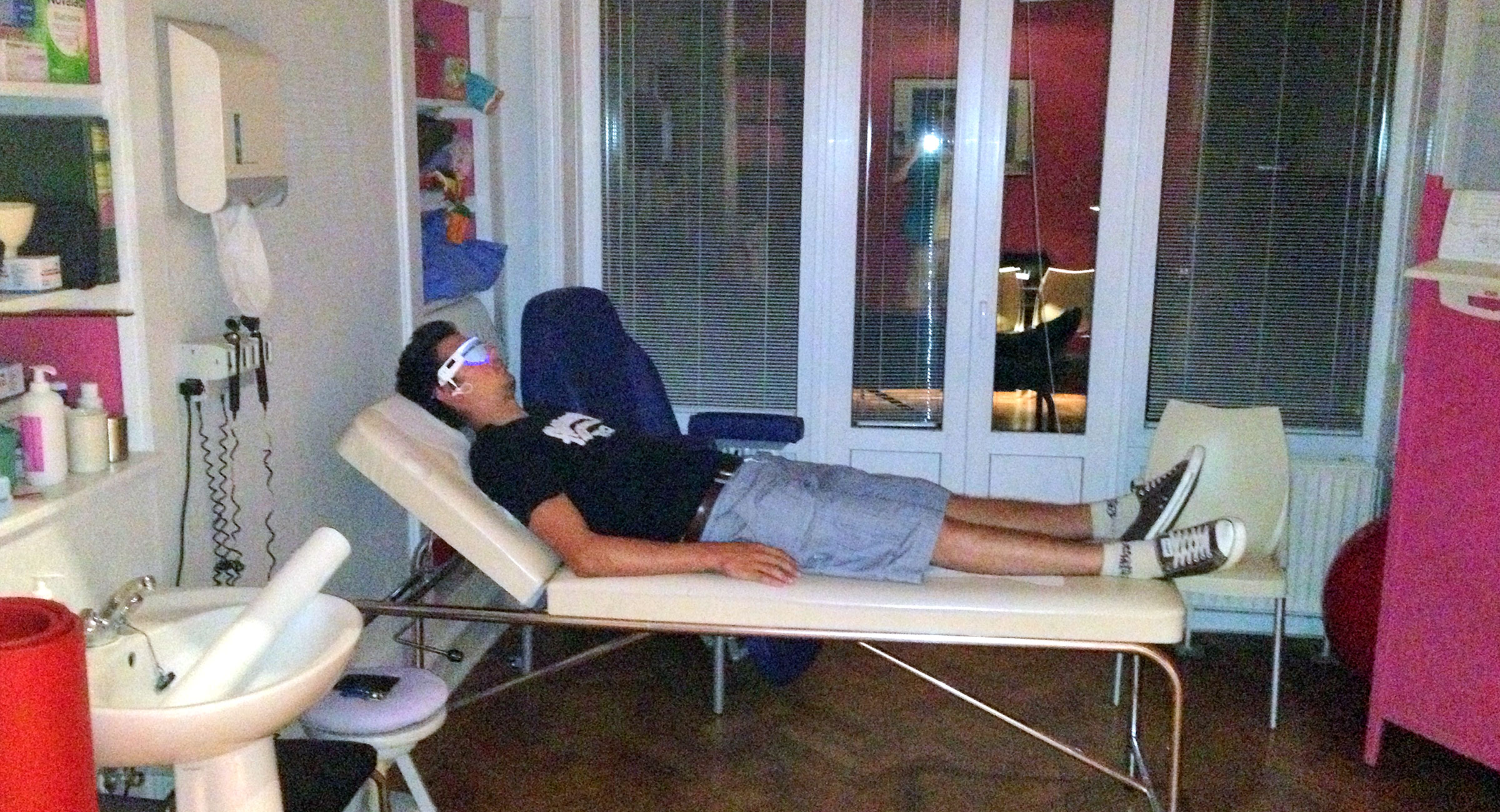
Pineal gland stimulation is done thru the retina. The retina is lined with receptors sensitive to light (470nm) and via a non-visual nervous system. Daylight hormones are generated, explaining the high quality of the recuperative rest observed during the PSiO turbo naps.
Complete study
- Study on the efficiency of PSiO glasses on melatonin inhibition
Stéphane Krsmanovic-Dumonceau, Nicolas d'Offay & Katrien Verschueren – August 2013 - Belgium
Links
(1) Phototransduction in ganglion-cell photoreceptors
Dr David Berson at Brown University - European Journal of Physiology© Springer-Verlag 200710.1007/s00424-007-0242-2
(2) Blue Light improve cognitive performance
Dr Lehrl & collegues - Journal of neural transmission. Department of Psychiatry and Psychotherapy, University of Erlangen-Nuremberg, Erlangen, Germany. Published online: January 25, 2007
(3) Study of efficacy of the MC2 AVS device
Dr Joseph Tracy - Int.J.Learning Technology, Vol.3, N°2, 2007